

THE MENSTRUAL CYCLE AND ITS RELATION TO FERTILITY
The Menstrual Cycle and Ovulation Prediction
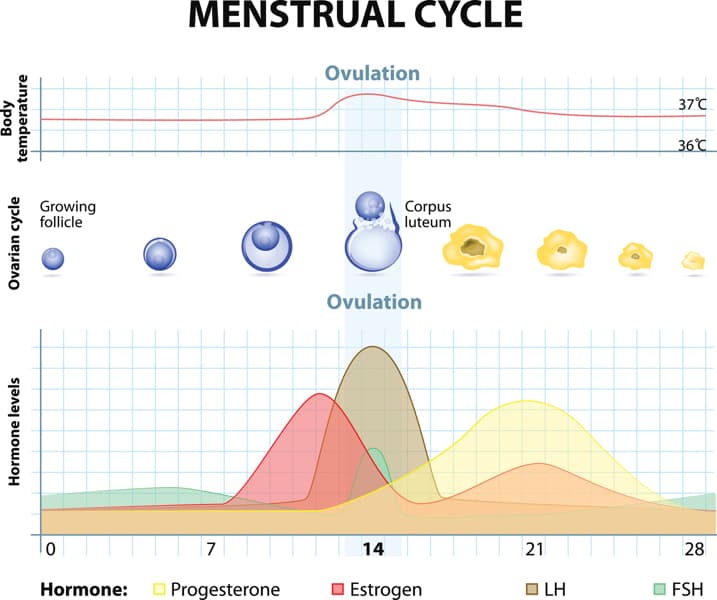
The menstrual cycle is divided into two parts: pre-ovulation and post-ovulation. The ovarian cycle refers to the cyclical development and expelling of the egg from the ovary. Though the length and regularity of a menstrual cycle may differ, the average duration of a complete menstrual cycle is 28 days (though healthy cycles can run from 21-36 days)
THE THREE PHASES OF THE MENSTRUAL CYCLE
- Pre-ovulation or Follicular Phase
Estrogen is produced within the ovaries by the follicles, which are stimulated by follicular stimulating hormone. Estrogen cools body temperature for the healthy production of eggs and stimulates a changing, developing pattern of cervical mucus production that typically culminates with secretions the consistency and color of egg white.
Sometimes these secretions are not seen but felt as a lubricative (slippery) sensation at the vulva. This fertile quality cervical mucus can keep sperm alive for up to 5 days. When this fertile quality mucus is not present, sperm die quickly. Estrogen also softens and opens the cervix and moves it higher in the vaginal canal.
- Ovulation
Luteinizing Hormone is the pituitary hormone that surges when one follicle reaches maturity to prompt the release of the egg from the ovary. The egg lives for 12 to 24 hours. If a second egg is released, it is released within 24 hours of the first egg.
- Post-ovulation or Luteal Phase
Progesterone is produced by the corpus luteum (the egg-releasing follicle) after ovulation. It prevents the release of all other eggs that cycle. Progesterone causes the uterine lining to thicken and sustain itself until the corpus luteum disintegrates, about two weeks after ovulation, or a pregnancy results.
Progesterone also causes the three primary fertility signs to change. Basal body temperature rises; the cervix closes lowers and returns to “firm”, and cervical mucus secretions dry up. The luteal phase, once the egg dies, is infertile. It typically lasts 12 to 16 days, but rarely varies by more than a day or two within individual women.
In normal cycles, the pre-ovulation phase can vary considerably in length, while the post-ovulation phase remains constant. Women who chart their fertility signs can accurately predict the onset of their next periods. Regardless of cycle length (24 to 36 days is considered normal), cycle regularity, relationship status, or reproductive age - from adolescence through to menopause - women can apply these scientific principles to determine their fertile days during each cycle and to monitor their gynaecological health.
REACHING PEAK FERTILITY
A woman's fertile period during her menstrual cycle, on average, lasts about seven days: seven days before ovulation (the release of the egg), the day of ovulation, and the day after ovulation. Your most fertile period starts about 4 or 5 days before ovulation, and ends about 24 hours following the release of the egg. Because the sperm can live in a woman's body for 5 days or so, a woman's fertile period is actually longer than the 24 hour live-span of the ovum.
To increase your chances of conceiving and becoming pregnant, predicting the days of peak fertility - and more specifically predicting the date of ovulation - is key. After this, chances of conception decrease quickly, as the egg has a short life-span of about 24 hours.
Ovulation is the period of peak fertility. Ovulation and pregnancy go hand in hand and the fertilization of the egg following ovulation leads to pregnancy. Therefore, awareness of your fertility cycle is the first step on the path to pregnancy. Every woman's cycle is unique (some cycles are short, some are long) and fertility awareness begins with monitoring your menstrual cycle and being attentive to ovulation symptoms.



Related Articles
Acne
Acne is a common skin condition with a prevalence of 80% in female and 90% in male teenagers. It is caused by a disorder of the oil glands that result in clogged pores and outbreaks of lesions commonly known as pimples. Risk factors: poor diet, excessive sugar, trans fats and processed foods.
Candidiasis
Candida overgrowth in the gastrointestinal tract is now becoming recognized as a complex medical syndrome known as chronic candidiasis or the yeast syndrome. Symptoms include: Multiple food allergies, or allergic to all foods( pan allergic), alternating diarrhea with constipation.
Chronic Fatigue
Chronic Fatigue Syndrome (CFS) is described as a severe, debilitating fatigue, lasting at least six months (of new and definite onset), associated with at least four of the following symptoms: impaired memory or concentration, sore throat, muscle pains, joint pains, unrefreshing sleep and post-exertion malaise.
Irritable Bowel Syndrome
Irritable bowel syndrome (IBS) - a diagnosis of exclusion, this condition is often misdiagnosed. Severe food intolerances / allergies may exhibit symptoms that are similar to Irritable Bowel Syndrome such as pain, cramping, gassiness, sudden bouts of diarrhoea, and constipation.